A Visual Guide to Keyword Targeting and On-Page SEO
This comprehensive a visual guide to keyword targeting and on-page SEO will walk you through the core principles, practical steps, and expert insights needed to build content that ranks. Whether you’re a business owner or a Local SEO Expert managing client campaigns, this framework will help you align your content with search intent and maximize visibility.
In today’s competitive digital landscape, ranking on Google is no longer optional — it’s essential. Businesses, bloggers, and marketers alike rely on Search Engine Optimization to attract consistent, high-quality traffic. But SEO is not just about adding keywords to a page and hoping for the best. It requires strategy, structure, and clarity.
Understanding Keyword Targeting
Keyword targeting is the process of identifying and strategically placing search terms within your content so that search engines understand what your page is about. But modern SEO goes far beyond simple keyword repetition.
1. Start with Search Intent
Before selecting a keyword, ask: What is the user trying to accomplish?
Search intent typically falls into four categories:
- Informational – The user wants to learn something.
- Navigational – The user is looking for a specific website or brand.
- Transactional – The user intends to make a purchase.
- Commercial Investigation – The user is comparing options before buying.
For example:
- “What is on-page SEO?” → Informational
- “Best SEO tools 2026” → Commercial
- “Hire Local SEO Expert near me” → Transactional
Understanding intent ensures your content actually satisfies what users expect when they click.
The Visual Keyword Framework
To simplify keyword targeting, imagine a layered structure:
Primary Keyword
This is your main focus phrase. It defines the topic of the page and should appear in:
- Title tag
- H1 heading
- URL
- Opening paragraph
- Naturally throughout the body
Example: “on-page SEO guide”
Secondary Keywords
These are closely related variations and supporting phrases. They reinforce relevance and expand topical coverage.
Example:
- keyword targeting strategy
- SEO content optimization
- page ranking factors
Long-Tail Keywords
Longer, more specific phrases often reflect high intent and lower competition.
Example:
- how to optimize title tags for SEO
- best on-page SEO practices for small businesses
Visually, you can think of this as a hub-and-spoke model:
Primary Topic → Supporting Subtopics → Specific Questions
This structure helps search engines see your page as comprehensive and authoritative.
On-Page SEO: The Building Blocks
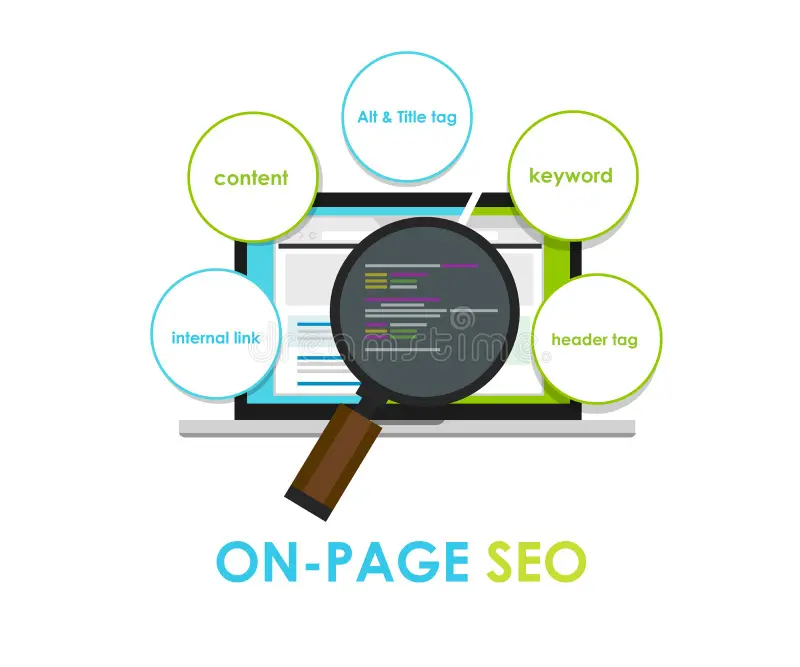
Once you have your keywords, the next step is placing them correctly. On-page SEO refers to optimizing the elements within your website to improve rankings.
Let’s break it down.
1. Title Tag Optimization
Your title tag is one of the strongest ranking signals.
Best practices:
- Place the primary keyword near the beginning.
- Keep it under 60 characters.
- Make it compelling to increase click-through rates.
Example:
A Visual Guide to Keyword Targeting and On-Page SEO
This tells both users and search engines exactly what the page covers.
2. Meta Description
While meta descriptions do not directly impact rankings, they strongly influence clicks.
Tips:
- Include your primary keyword naturally.
- Keep it between 150–160 characters.
- Focus on benefits and clarity.
A strong meta description can significantly increase your organic traffic even if your ranking position stays the same.
3. URL Structure
Clean URLs improve both usability and SEO.
Best practices:
- Keep them short.
- Include the primary keyword.
- Avoid unnecessary numbers or symbols.
Example:yourwebsite.com/keyword-targeting-on-page-seo
Simple, readable, and optimized.
4. Headings (H1, H2, H3)
Headings structure your content visually and semantically.
- H1: Main title (one per page).
- H2: Major sections.
- H3: Subsections.
Use secondary keywords in subheadings when relevant. This improves readability and signals topic depth.
Search engines analyze headings to understand page hierarchy, so structured content performs better.
5. Content Optimization
The body of your content is where SEO truly happens.
Modern Search Engine Optimization prioritizes:
- Relevance
- Depth
- Clarity
- User experience
Avoid keyword stuffing. Instead:
- Write naturally.
- Use synonyms and related phrases.
- Answer common questions.
- Provide real value.
A helpful rule: If the content sounds robotic, it’s probably over-optimized.
6. Image Optimization
Images enhance user experience, but they also offer SEO opportunities.
Optimize by:
- Using descriptive file names (e.g., on-page-seo-checklist.jpg)
- Writing keyword-relevant alt text
- Compressing images for faster load times
Search engines cannot “see” images, so alt text provides context.
Internal Linking Strategy
Internal links guide both users and search engines through your site.
Benefits:
- Distributes page authority
- Helps search engines discover content
- Improves user navigation
- Increases time on site
For example, if you mention “technical SEO basics,” link to a related article on that topic.
A Local SEO Expert often uses internal linking strategically to connect service pages, blog posts, and location pages, strengthening local ranking signals.
The Role of Semantic SEO
Search engines are smarter than ever. Google no longer relies only on exact-match keywords — it evaluates context and relationships between terms.
Semantic SEO means:
- Covering related concepts
- Including entity-based keywords
- Answering related questions
- Demonstrating topic authority
For example, an article about on-page SEO might also mention:
- Core Web Vitals
- User experience
- Mobile responsiveness
- Schema markup
This broader context signals expertise.
Content Depth vs. Keyword Density
One of the biggest myths in SEO is that keyword density determines rankings.
In reality:
- Search engines prioritize helpful, complete content.
- Thin pages rarely rank well.
- Comprehensive content that satisfies intent performs better.
Instead of focusing on how many times a keyword appears, focus on answering the user’s question better than anyone else.
Quality beats repetition.
Local SEO Considerations
If you serve a geographic area, keyword targeting becomes even more specific.
A Local SEO Expert understands the importance of:
- Location-based keywords (e.g., “SEO services in Chicago”)
- Google Business Profile optimization
- NAP consistency (Name, Address, Phone number)
- Local backlinks
- Local schema markup
For local businesses, combining on-page SEO with geo-targeted keywords can significantly increase visibility in map results and local searches.
Technical Elements Supporting On-Page SEO
While content is crucial, technical factors also matter:
- Mobile responsiveness
- Page speed
- Secure HTTPS connection
- Proper indexing
- Clean site architecture
Even perfectly optimized content can struggle if technical SEO issues exist.
Search Engine Optimization is holistic — all components must work together.
Measuring SEO Performance
Optimization is not a one-time task. Track performance to refine your strategy.
Key metrics to monitor:
- Keyword rankings
- Organic traffic growth
- Click-through rate (CTR)
- Bounce rate
- Time on page
- Conversion rate
Tools like Google Search Console and Google Analytics provide valuable insights into what’s working and what needs improvement.
SEO is an ongoing process of testing, analyzing, and improving.
Common Mistakes to Avoid
Even experienced marketers make SEO mistakes. Watch out for:
- Targeting keywords without considering search intent
- Overusing keywords unnaturally
- Ignoring internal linking
- Writing thin content
- Neglecting mobile optimization
- Forgetting to update old content
Consistency and refinement separate average results from exceptional rankings.
The Visual SEO Workflow
To simplify everything, follow this structured workflow:
- Research keywords based on intent.
- Select primary, secondary, and long-tail keywords.
- Map keywords to specific pages.
- Optimize title, URL, and headings.
- Write comprehensive, helpful content.
- Add internal links and optimize images.
- Track performance and refine.
Think of SEO as a cycle — not a checklist you complete once.
Final Thoughts
Keyword targeting and on-page SEO are the foundation of successful Search Engine Optimization. When executed strategically, they allow your content to align with user intent, communicate clearly with search engines, and compete effectively in crowded markets.
Whether you’re managing your own website or working as a Local SEO Expert for clients, mastering these fundamentals will dramatically improve organic performance.
Remember:
- Focus on intent, not just keywords.
- Structure content clearly.
- Optimize strategically, not excessively.
- Measure and improve continuously.
SEO is not about gaming algorithms — it’s about delivering value in the clearest, most accessible way possible.